

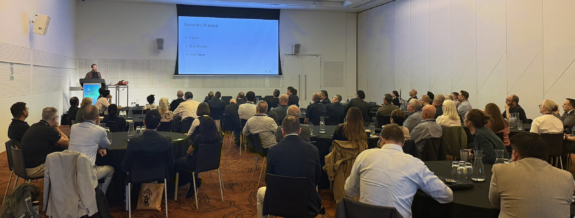
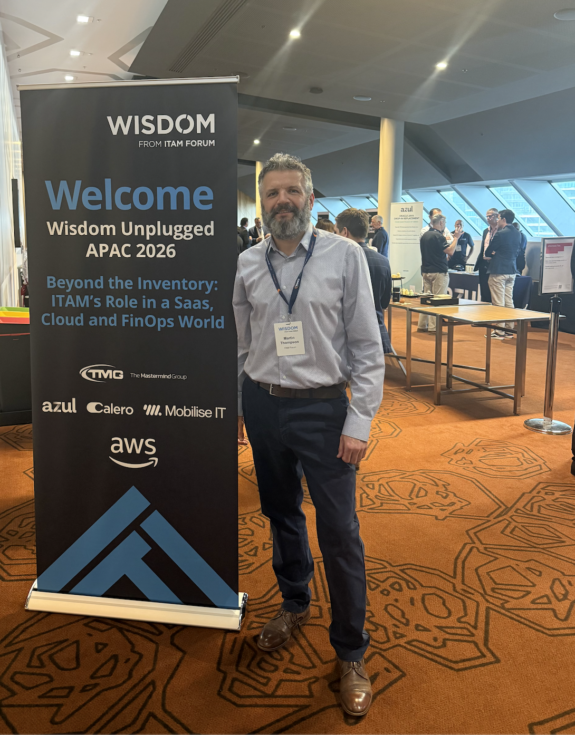
Thanks to everyone who came out to join us at our Wisdom unplugged event at the Melbourne Convention and Exhibition Centre.
Great to reconnect with the Australian ITAM community, a mixture of familiar faces and new connections.
We received positive feedback regarding our interactive ITAM Forum workshop sessions, some of the key conversations include:
FinOps in the tool belt?
27% were already qualified or planning to study FinOps, 37% considering it. 37% saying it’s not on their radar. I see future ITAM careers as having a mixture of ITAM and FinOps expertise, and even if FinOps isn’t your bag, I think it’s prudent to have basic awareness. In the same way that many ITAM professionals might learn ITIL Foundation, they don’t want to do incident, problem, change – but just have a working awareness of it. So for your future career prospects, you don’t need to live FinOps, but I don’t think ignorance of it is a great option for your next interview, budget conversation or board briefing.
Mobile Asset Regulatory Blind Spot
Most ITAM teams appear to be flying blind on mobile devices. The cost of the latest iphone or samsung device is becoming comparable if not exceeding laptop cost, and has a higher security profile given the significance of phone enabled 2fa etc.
For the Australian audience SOCI is a driver (regulation on maintaining critical infrastructure) but many global regulations point to the same “prove you know what you own and where it is”.
57% have mobile in scope for ITAM, but a third still don’t. Of those who do, managing the mobile fleet scores 5.5/10 for difficulty, and recovering devices when staff leave scores only 4.5, meaning the offboarding process, which is exactly when SOCI asset register accuracy matters most, is where things fall apart. 84% want to recover both laptops and mobile, but clearly aren’t finding it easy.
The gap between the SOCI compliance obligation and operational reality is wide, and most ITAM teams aren’t yet in the room where that conversation is happening (78% are either not engaged in SOCI discussions or don’t know if they are).
The Politics of SaaS Sprawl
Whilst a key concern around SaaS is lack of visibility of usage, it was also interesting to hear of the political blockages to SaaS optimisation:
Australian ITAM professionals were reporting that the vendor can be working against you with SaaS vendors deliberately sell around ITAM, straight to business stakeholders who “drink the cool-aid.” Licensing bundles are intentionally complex to prevent true rightsizing. By the time ITAM gets involved, the commitment is already made and the business owner is emotionally invested. This isn’t a data problem, but a political one.
Accountability for SaaS might sit in no man’s land. Centrally funded SaaS means no individual business unit feels the pain of waste. Showback reports exist but are “toothless without C-level support.” ITAM pros are reporting that sometimes users just don’t care. End user policies are absent or unenforced. The person doing the work has no real leverage.
Exposing waste might embarrass the people who created it and sometimes might need careful positioning. This has always been the case for software optimisation but SaaS means speaking directly to stakeholders across the business outside of IT who might not appreciate the nuances of ITAM and why its looking to optimise.
Finally, an interesting discussion around the low hanging fruit of SaaS optimisation in the first year, and the potential of all of that good work unravelling and savings being reversed if interest is lost in years 2, 3 onwards. Year one shows the headline, years two and three need to be funded by ongoing savings.
CMDB: Source of reference over source of truth
Finally, an interesting discussion around data accuracy to drive smart decision making and viewing federated data sources as a point of reference rather than assuming it is the ultimate source of truth.
It reminds me of military intelligence style briefings (We believe the enemy is over that hill based on three independent sources), corroborating across independent sources increases confidence, but never implies the data is perfect.
I think this is a useful reframe for ITAM professionals, do we have enough evidence to take an action, rather than expecting the CMDB to be the ultimate source of truth.
Lots to follow up on here, stay tuned for further content on these conversations from the ITAM Forum.
Thanks again to our delegates, sponsors and speakers for helping us create an enjoyable event with great conversations and new connections. Thanks in particular to Fulvio and team at TMG who helped us with event logistics, we couldn’t have done it without you.
